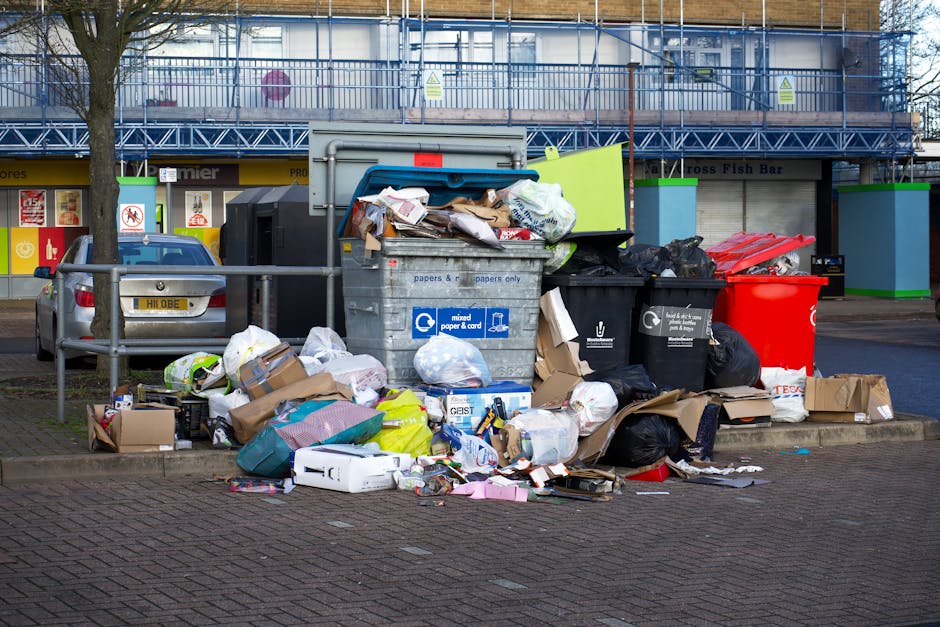
Real cost comparison rubbish removal versus skip hire Ealing
If you are trying to work out the real cost comparison rubbish removal versus skip hire Ealing, you are probably already at the annoying stage where the waste is there, the space is not, and the clock is ticking. Maybe it is a flat clear-out, a builder's mess, a garage full of old bits, or that one weekend job that somehow turned into three. In real life, the cheapest option on paper is not always the cheapest overall. Access, loading time, permits, labour, waste type, and how quickly you want it gone all change the picture.
This guide breaks down the numbers in plain English, but it also goes further than a basic price comparison. You will see how each option works, where the hidden costs usually show up, what suits different jobs in Ealing, and how to avoid paying for more capacity than you need. If you are deciding between a man-and-van style rubbish removal service and a skip, this is the practical bit you want before you book anything.
Practical summary: if your waste is ready to be loaded and can sit on private land with easy access, a skip can work well. If you want speed, labour included, or you are dealing with awkward access, rubbish removal often ends up better value. Not always cheaper upfront. Often cheaper in the end. There is a difference.
Table of Contents
- Why the real cost comparison matters
- How rubbish removal and skip hire work
- Key benefits and practical advantages
- Who this is for and when it makes sense
- Step-by-step guidance
- Expert tips for better results
- Common mistakes to avoid
- Tools, resources and recommendations
- Law, compliance, standards, or best practice
- Options, methods, or comparison table
- Case study or real-world example
- Practical checklist
- Conclusion
- Frequently asked questions
Why Real cost comparison rubbish removal versus skip hire Ealing Matters
On the surface, skip hire looks straightforward. You pick a size, it gets dropped off, you fill it, and it is collected later. Rubbish removal looks equally simple. A team comes, loads the waste, and clears it away. But the real cost is rarely just the headline price.
That matters in Ealing because properties are often a mixed bag: Victorian terraces with tight front access, flats with stairwells, busy high street locations, maisonettes with limited parking, and homes where the driveway is already taken by the family car. The practical setting changes the job. A skip that is cheap in principle can become expensive once you factor in permit needs, restricted placement, labour you still have to provide, or the risk of underestimating the size.
Rubbish removal can look dearer at first glance because you are paying for labour as well as disposal. Yet if two people can clear in thirty minutes what might take you two full days, the actual value is different. Time has a cost. So does your back, if we are being honest.
There is also the problem of waste volume. Most people estimate badly the first time. A pile that looks like "a small load" can turn into far more once broken down. A skip may solve that, but if you order one too large, you are paying for empty air. Not ideal.
If you are comparing options alongside other property jobs, it can also help to think about the type of clearance. For example, a full house clearance or a room-specific job like loft clearance often favours a labour-included service, while a simple pile of builders' rubble may fit a skip better. The same logic applies to specialist clearances such as furniture disposal or builders waste clearance.
In short: the comparison matters because the cheapest-looking option can be the pricier one after the real-world stuff gets added in.
How Real cost comparison rubbish removal versus skip hire Ealing Works
How rubbish removal works
With rubbish removal, you book a collection slot, describe the waste, and usually share a rough idea of volume or send photos. The team arrives, loads the material, and takes it away. You are paying for collection, labour, transport, and disposal. In many cases, the main benefit is convenience. You do not have to lift heavy items, stand over the pile, or spend the day shuttling bits into a container.
That makes it particularly useful for bulky waste, mixed waste, awkward items, or situations where the waste is spread across several rooms. Think old wardrobes, broken shelving, bagged clutter, damp cardboard, bits of garden waste, or post-renovation leftovers. It is also handy when access is awkward and a skip would be a nuisance. Nobody enjoys trying to reverse plan a driveway with a lorry watching from the road, to be fair.
How skip hire works
Skip hire is a container-based service. A skip is delivered to your property or site, left for a set period, and collected when full or when the hire period ends. You do the loading yourself unless you arrange extra help elsewhere. The fee normally covers the skip, delivery, collection, and disposal of the waste inside agreed rules.
The big attraction is flexibility. If you have a steady flow of rubbish over several days, a skip gives you somewhere to put it. It suits DIY work, building jobs, garden clearances, and situations where multiple people are generating waste over time. A skip can also make sense if you want the job out of the way without organising a same-day collection.
Where the costs start to diverge
The moment you add real-life conditions, the price gap changes. With skip hire, the final bill may be affected by:
- skip size chosen too small or too large
- permit requirements if the skip goes on a public road
- extra hire days
- restricted waste types
- laborious loading if you need to hire help yourself
With rubbish removal, costs may be influenced by:
- the actual amount of waste on arrival
- weight and waste type
- access difficulties
- time on site
- special disposal needs for certain materials
So the comparison is not just "which quote is lower?". It is "which option gets the whole job done for the least hassle and the least surprise?". Big difference.
Key Benefits and Practical Advantages
There is a reason both options exist. They solve slightly different problems.
Benefits of rubbish removal
- Labour included: you do not have to carry heavy furniture, bag everything yourself, or coordinate help.
- Faster for mixed loads: it can suit one-off clear-outs where waste is all over the place.
- Better for awkward access: useful in flats, terraced streets, or properties without a practical place for a skip.
- No skip sitting outside: no eyesore, no road clutter, less risk of neighbours objecting.
- Flexible for bulky items: ideal for sofas, beds, wardrobes, and awkward oddments.
Benefits of skip hire
- Good for ongoing jobs: useful if the waste is generated over several days or weeks.
- Clear boundary for waste: everyone knows where rubbish goes, which helps on busy sites.
- Can be cost-effective for heavy, repetitive DIY waste: especially where labour is already covered by you or your team.
- Simple concept: put waste in, wait for collection, job done.
The practical advantage usually comes down to effort. If you have the time, the body strength, and the access, a skip can be economical. If you want the least disruption, rubbish removal usually wins on convenience. That is the honest version.
For mixed household jobs, services like home clearance, garage clearance, or flat clearance can be especially efficient because they remove the sorting and loading burden from you. Same for larger commercial jobs where office clearance or business waste removal is needed.
Who This Is For and When It Makes Sense
This comparison matters most if you are not doing a huge construction site but you still have more waste than a car boot can handle. That is the sweet spot where people usually hesitate.
Rubbish removal is often the better fit for:
- busy homeowners who want the job gone quickly
- flat residents with limited access or no private outside space
- older customers who do not want to lift or carry
- landlords clearing after a tenant move-out
- people dealing with bulky furniture or mixed household waste
- anyone who wants one visit and minimal disruption
Skip hire is often the better fit for:
- DIY projects with predictable waste
- ongoing renovation work
- larger garden projects with repeated loading
- customers who have space on their drive or private land
- situations where several people will be throwing waste into one place over time
If your job is a one-off clear-out and the pile is mixed, rubbish removal usually makes life easier. If your job is a slow-burn refurbishment where debris appears every day, a skip might be the better organiser. Neither choice is universally right. That is the bit people often skip over, ironically enough.
Step-by-Step Guidance
- List the waste by type. Separate bulky items, bagged rubbish, green waste, builders' debris, and anything that may need special handling.
- Estimate the volume honestly. Do not guess from memory. Stand in front of it and look again. We all underestimate piles when they are in the corner of the room.
- Check access. Ask whether a skip can actually be placed where you want it, and whether a collection lorry can reach the property easily.
- Think about labour. If you have to move everything to the curb or down stairs yourself, include that effort in the real cost.
- Compare total cost, not headline price. Add permits, extra days, loading time, and any help you might need.
- Match the service to the job type. For example, a mixed house declutter may suit house clearance, while a renovation leftover pile may suit builders waste clearance.
- Request a clear quote. Make sure it explains what is included, what could change the price, and how access is assessed.
- Book with timing in mind. If you need the space for guests, tradespeople, or a move, choose the option that gives you certainty.
A useful trick is to photograph the waste from a few angles in daylight. Morning light near a window often shows volume more honestly than your memory does after a long week. Sounds trivial, but it works.
Expert Tips for Better Results
Here are the little details that usually improve the outcome and reduce the final bill.
- Break items down where practical. Flat-pack furniture, for instance, takes up less space when disassembled. Just do not waste hours doing delicate surgery on something that will be collected whole anyway.
- Separate clean materials from mixed waste. Clean wood, garden waste, metal, and furniture may be handled differently from general mixed rubbish.
- Be honest about awkward items. Tell the provider about mattresses, heavy cabinets, soil, rubble, or wet waste. Surprises slow things down.
- Group the waste near access points. Even if the team is doing the lifting, clear paths save time.
- Check whether furniture can be removed as part of a dedicated service. Pages like furniture clearance and furniture disposal are relevant when the load is mostly sofas, wardrobes, tables, and chairs.
- Use specialist services when the job is specialised. A garden heap is not the same as office filing cabinets, and neither is the same as loft clutter.
Also, ask yourself a simple question: do you want a pile removed, or do you want the room back? They are not quite the same thing. If you want the room back, labour matters more than people expect.
Common Mistakes to Avoid
Most bad experiences happen because one of these mistakes slips in early.
- Choosing by headline price alone. The cheapest quote may not include labour, permits, or enough capacity.
- Underestimating the waste volume. This can lead to a too-small skip or a rubbish removal quote that changes once the team sees the load.
- Ignoring access issues. Narrow streets, stairs, tight drives, and parking restrictions all affect the real cost.
- Mixing unsuitable items. Some materials need separate handling. Do not assume everything can go in one load.
- Forgetting the time cost of self-loading. A skip is not free labour. You are the labour.
- Booking too early or too late. A skip left too long can become inconvenient; a collection booked too late can hold up the rest of the job.
Another common one: people forget about where the skip will go once it arrives. The front garden may seem fine until you realise the hedge blocks delivery, the pavement needs permission, or the bins are still out. Bit of a faff. Worth checking properly.
Tools, Resources and Recommendations
You do not need fancy equipment to make a better decision, just a few practical checks.
- Phone photos: useful for getting a realistic quote and showing access points.
- Measuring tape: helpful if you want to estimate pile size or check whether a skip will physically fit.
- Simple notes: list the main waste types so you do not forget rubble, furniture, bags, or green waste.
- Calendar: use it to match the collection date with tradespeople, moving dates, or tenancy handovers.
- Provider terms: review the details carefully. For general service standards, payment methods, and expectations, the site's pricing and quotes, payment and security, and terms and conditions pages are worth reading before you book.
If you are conscious about disposal impact, it can also help to look at recycling and sustainability. In the real world, people want the clutter gone, yes, but many also want to know the waste is being handled responsibly. Fair enough.
Law, Compliance, Standards, or Best Practice
Waste handling in the UK is not something to treat casually. Even without getting buried in legal language, a few common-sense standards apply.
First, the business collecting your waste should be able to handle and dispose of it responsibly. If you are dealing with a provider, it is sensible to look for clear communication on safety, insurance, and handling standards. Pages such as insurance and safety and health and safety policy are helpful signals that the operation takes this seriously.
Second, if a skip is placed on a public road or pavement, a permit may be required depending on local rules. These permissions are usually part of the practical cost picture, even if they are not the most exciting part of the quote. Nobody wakes up thrilled about permit admin. Still, it matters.
Third, waste should be segregated sensibly where possible. Mixed loads can be more expensive to process than clean, separated material. This is one reason why a clear-out of mixed household items is often priced differently from a straightforward load of inert DIY waste.
Finally, there is the basic best-practice issue: do not overload anything, do not block access routes, and do not guess about hazardous or restricted material. If anything unusual is involved, mention it upfront. That alone prevents a lot of trouble.
Options, Methods, or Comparison Table
Here is a straightforward comparison to help you choose. Real costs vary by load, access, and timing, so think of this as a decision framework rather than a fixed price list.
| Factor | Rubbish removal | Skip hire |
|---|---|---|
| Labour | Included | Usually self-loading |
| Speed | Often same-day or next-day | Depends on delivery and collection slots |
| Best for | Mixed loads, bulky items, awkward access | DIY waste, ongoing jobs, predictable volumes |
| Space needed | Minimal at the property | Needs room for the skip |
| Hidden costs | Extra volume, difficult access, special items | Permits, extra hire days, wrong size choice |
| Convenience | Very high | Moderate |
| Cost control | Good when you want a fixed clear-out | Good when you know the exact volume and can load it yourself |
Simple rule of thumb: if the waste is already separated, easy to carry, and you have space, skip hire can be solid value. If the waste is mixed, heavy, or scattered through the property, rubbish removal often saves money in the bigger picture.
Case Study or Real-World Example
Let us use a realistic Ealing-style scenario. Imagine a family clearing out a first-floor flat after years of accumulation: two wardrobes, a bed frame, a broken chest of drawers, ten bags of mixed household waste, a small desk, and a few odds and ends from the hallway cupboard. There is no lift. Parking is tight. The staircase is narrow and a bit twisty, which is common enough around here.
At first glance, a skip may seem cheaper. But once you factor in the fact that the items have to be carried down stairs, the family would still need to do the lifting, the stacking, and probably the stress of finding somewhere practical to place the skip. If access is awkward, that can become a long day. And a long day often turns into a sore back and a takeaway dinner, which is not really savings.
In that scenario, rubbish removal is often the better real-world value because the team handles the lifting and the loading. The family gets the flat cleared in one visit, the corridor stays less cluttered for less time, and the job is done without them organising extra labour.
Now switch the scene. A homeowner is redoing a garden path and shed area over three weekends. They have rubble, soil, broken slabs, timber offcuts, and regular debris coming out in small batches. They have a driveway. In that case, skip hire may make more sense because the waste appears gradually and the homeowner can keep filling it over time. The labour is already theirs, so the skip becomes a simple on-site container.
Same city, different answer. That is why the decision should be based on the job, not just the price tag.
Practical Checklist
Use this before you book anything.
- Have I listed all waste types clearly?
- Do I know whether the job is single-load or ongoing?
- Is access easy enough for a skip, or would that be awkward?
- Do I want to do the lifting myself?
- Have I checked whether the waste is bulky, mixed, heavy, or special?
- Have I considered permit needs if the skip goes on public land?
- Do I understand what the quote includes?
- Have I thought about the real cost of my time and effort?
- Would a dedicated service such as garden clearance or garage clearance fit the job better than a general option?
- Am I choosing the option that will leave the property actually usable, not just technically emptied?
If you can answer yes to the first four or five, you are already ahead of most people. Honestly, that is usually half the battle.
Conclusion
The real cost comparison rubbish removal versus skip hire Ealing is not about finding one universal winner. It is about matching the service to the job, the access, the waste type, and the amount of effort you want to take on yourself. Skip hire can be excellent value for clear, ongoing DIY or building waste where you have space and time. Rubbish removal can be the smarter purchase for mixed loads, bulky items, flats, awkward access, and anyone who would rather not spend a Saturday sweating over stairs and heavy lifting.
If you are still unsure, the best move is to compare both options using the same facts: volume, waste type, access, timing, and whether labour is included. That simple framework usually makes the answer clearer within a minute or two.
Get a free quote today and see how much you can save.
And if you are weighing up a wider clearance project, it can help to learn more about the team behind the service on the about us page. A good decision often starts with a bit of clarity, and in this sort of job, clarity is a relief all by itself.
Frequently Asked Questions
Is rubbish removal cheaper than skip hire in Ealing?
Sometimes, but not always. If you need labour, have awkward access, or are clearing bulky mixed waste, rubbish removal can be better value overall. If you have a straightforward load and can do the lifting yourself, skip hire may come out cheaper.
What is the biggest hidden cost with skip hire?
The most common hidden costs are permit fees, extra hire days, and the mistake of ordering the wrong size. Labour is another big one, because you usually provide it yourself.
When does rubbish removal make the most sense?
It makes the most sense when the waste is bulky, scattered, heavy, or difficult to move. It is also a good option if you want a fast clearance without managing the loading yourself.
Do I need a skip permit in Ealing?
If the skip is placed on public land such as a road or pavement, a permit may be required depending on local rules. If it goes on private land with enough space, a permit may not be needed. Always confirm before booking.
How do I know what size skip I need?
A good provider will help you estimate from the type and amount of waste. If you are unsure, photos are usually more useful than rough verbal guesses. Most people underestimate the pile at least once.
Is rubbish removal good for furniture?
Yes. It is often a very practical option for sofas, beds, wardrobes, tables, and other bulky household items. If furniture is the main issue, furniture clearance can be especially efficient.
Which option is better for a flat clearance?
Rubbish removal is often better for flats because access is usually tighter and there may be no easy place for a skip. Lift access, stairs, and parking can all make the comparison tilt away from skip hire.
Can builders' waste go with household rubbish?
Sometimes, but not always. Mixed loads need to be discussed carefully because heavy rubble, timber, plasterboard, and general household waste may be priced differently. A specialist builders waste clearance service can avoid confusion.
How quickly can rubbish removal be arranged?
Often quite quickly, sometimes the same day or next day depending on availability and the size of the job. That speed is one of the main reasons people choose it when time is tight.
Is skip hire better for garden waste?
It can be, especially for ongoing pruning or landscaping jobs. But if the garden waste is mixed with old furniture, broken pots, soil, and other awkward bits, a dedicated garden clearance may be simpler.
What should I ask before booking either option?
Ask what is included, how waste type affects the price, whether access changes the quote, how long the hire or visit lasts, and whether there are any restrictions. A clear answer upfront saves a lot of chasing later.
Can I compare quotes fairly if one includes labour and the other does not?
Not really. You need to compare the full real cost, not just the headline number. Add your own time, loading effort, and any permit or extra hire charges before deciding.